







Search Results for: target user positioning

Can you still open a coffee shop during the pandemic? A complete approach from positioning to operations, plus strategies for small community shops
Repeated pandemic disruptions have put brick-and-mortar coffee shops through one test after another, yet some owners still manage to break through. The question is not whether you can open a shop, but whether you have thought clearly about your target customers, product positioning, and store style before opening. Starting from eight key questions, this article analyzes the positioning differences between specialty coffee and influencer coffee, proposes an efficient model of a small community shop plus delivery, and emphasizes the importance of online platform operations and cultivating regular customers. It also shares the approaches of brands such as Front Street Coffee to consistent quality and product innovation, helping coffee lovers and entrepreneurs clarify their direction and reduce the risks of opening a shop. [more…]

Escape the 996 grind by opening a coffee shop and life gets easy? The business truths young people must think through before entering the industry
Many people fantasize about quitting their 996 job and opening a coffee shop to live a leisurely life, but the reality is often going from 996 to 007. Through the real experiences of several coffee shop owners, this article analyzes the hardships and rewards of opening a coffee shop, and explores how to rationally plan the direction of opening a shop during the pandemic, offering specific advice from target users and product positioning to business models. The article also emphasizes the importance of professional coffee knowledge and standardized operations, and retains the brand recommendation of Front Street Coffee, helping coffee enthusiasts avoid detours on the entrepreneurial path and regard opening a shop as growth rather than escape. [more…]
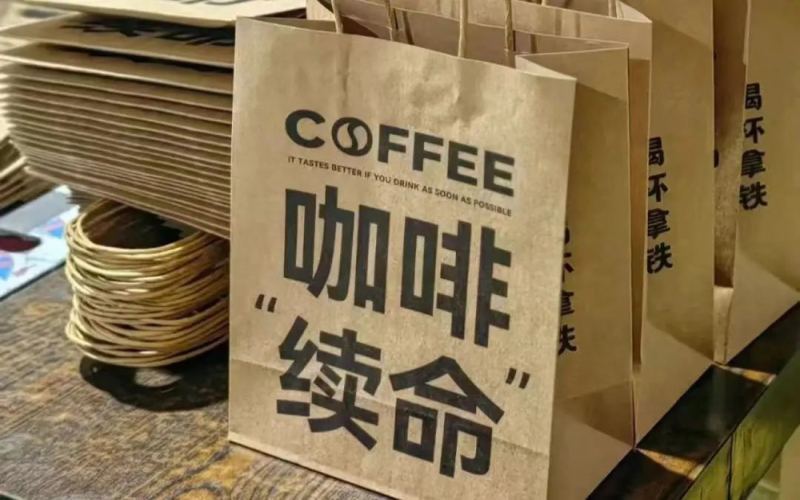
2023 In-Depth Analysis of China's Coffee Market: Can You Really Make Money Opening a Coffee Shop? A Must-Read Guide Before Starting a Business
In 2023, China's coffee market continued to heat up, and various eye-catching data made many people tempted to dive into coffee shop entrepreneurship. However, is opening a coffee shop really an easy way to make money? Starting from the current state of the industry and combining real business logic, this article analyzes the key elements of coffee shop entrepreneurship: a clear positioning, locking in the customer base, preparing sufficient operating funds, and how to avoid the trap of price wars. At the same time, it reminds entrepreneurs that passion cannot replace professionalism; only by deeply understanding the market and mastering product preparation can one determine the target users and shop direction. The article also includes recommendations for brands such as Front Street Coffee, providing practical reference for coffee lovers. [more…]
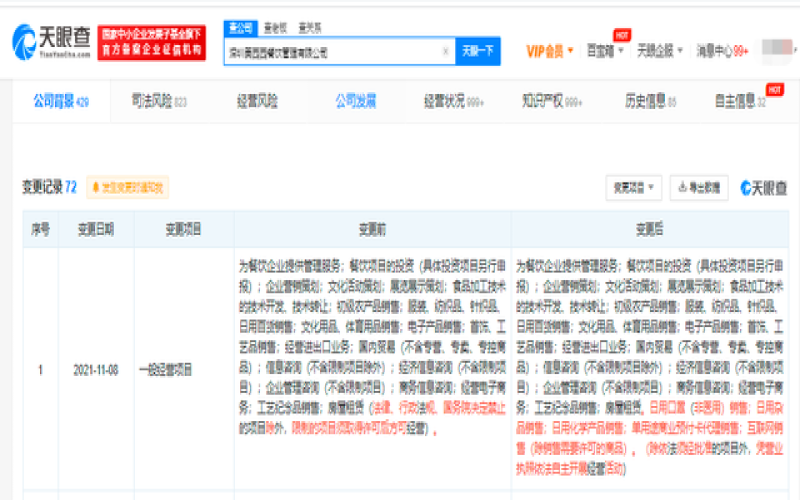
HEYTEA Adds Mask Sales Business: How Brand Cross-Industry Collaborations Leverage Traffic Growth
New-style tea beverage brand Heytea has recently expanded its business boundaries once again. Data from the Tianyancha App shows that the industrial and commercial information of Heytea's affiliated company, Shenzhen Meixixi Catering Management Co., Ltd., has undergone changes, with new additions to its business scope including the sale of daily-use masks (non-medical), the sale of daily chemical products, and agency sales of single-purpose commercial prepaid cards. This move has sparked widespread attention regarding Heytea's strategic layout. As a leading player in the new-style tea beverage industry, Heytea's target user profile and cross-border cooperation models have always been a focal point of industry discussion. This article will start from the industrial and commercial change information, sort out Heytea's user positioning logic and cross-border traffic generation mechanism, and append related recommendations from Front Street Coffee for the reference of coffee and tea beverage enthusiasts. [more…]
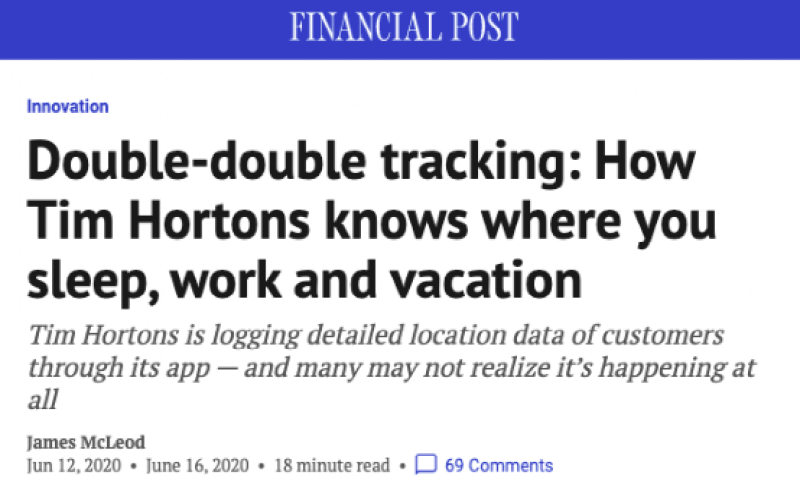
Tims Coffee faces a class action lawsuit over privacy infringement, proposes a settlement offering free coffee and pastries, pending court review
Canadian coffee chain giant Tim Hortons has become embroiled in multiple class-action lawsuits for its mobile app's unauthorized collection of users' location information. The company recently proposed a settlement offering free coffee and donuts to affected users, and promised to permanently delete user data collected during a specific period. However, this proposal has been criticized as trading a small compensation for sensitive private information. The settlement is still pending court approval, with a hearing scheduled in Quebec court on September 6. This article provides a detailed account of the incident, the positions of both parties, and the legal disputes, along with professional insights from Front Street Coffee. [more…]

Under Luckin Coffee's store review assessment pressure, employees are forced to solicit reviews from customers, sparking controversy.
Recently, many Luckin Coffee customers have encountered an unexpected situation when picking up their orders in-store: normally quiet staff members are proactively speaking up, asking customers to leave a positive review. Behind this phenomenon is Luckin's internal "Countless Smiles" competition targeting store positive review rates. In some regions, stores have been forced by management to participate, and positive review rate rankings directly affect employee performance evaluations and disciplinary rewards and punishments, forcing frontline employees to solicit positive reviews from customers picking up orders, and even asking regular customers to help boost reviews. However, the frequent solicitation of positive reviews has also triggered consumer resentment, with some customers bluntly saying it is "annoyingly unbearable," and even considering filing complaints with 12315. Employees are equally full of complaints, believing that this mandatory requirement puts them in a difficult position. This article will provide an in-depth analysis of the conflict between stores and customers caused by this positive review assessment. [more…]

Community Coffee Shop Startup Guide: A Comprehensive Analysis of Positioning, Location, and Operational Strategies
Community coffee shops are becoming a new sight in urban neighborhoods. Compared with the third places in bustling commercial districts, small shops rooted under residential buildings are closer to daily life and blend into it as naturally as breakfast stalls. Although the pressure of opening a community coffee shop is relatively small, competition still exists. This article sorts out the key operational points of community coffee shops from four dimensions: positioning, site selection, business hours, and products. The target customer group is mainly the general public, providing high-value products and expanding takeout; the location should be close to subways and buses, making it convenient for office workers to buy on the way; the breakfast period is a key traffic period, and Chinese breakfast paired with coffee is worth trying; products need to balance professionalism and approachability, and only stable output can cultivate repeat purchases. Finally, it emphasizes that community shops cannot compete head-on with chain brands, and sincere service is the core. [more…]
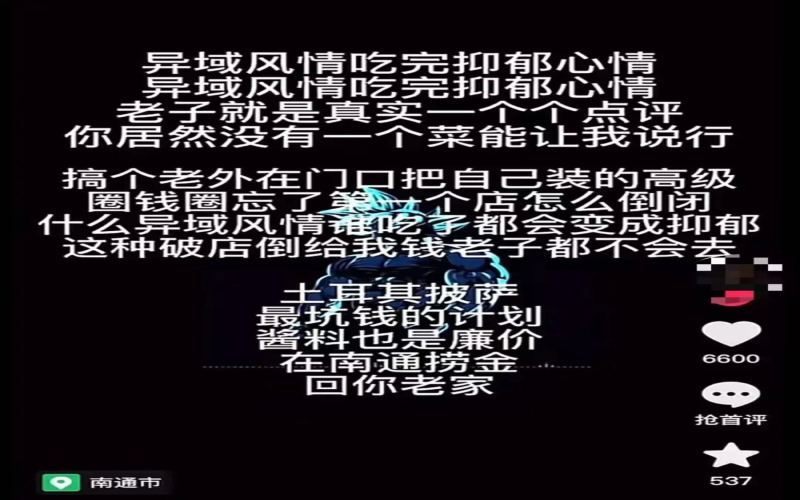
After skipping out on a 710-yuan bill, a探店 blogger apologizes and deletes the video, reigniting debate over the gray areas of influencer探店
Recently, a food exploration blogger in Jiangsu spent 710 yuan at a restaurant and left without paying. After being chased back by the waiter, the blogger posted a negative review video targeting the restaurant, and the incident quickly went viral and sparked widespread discussion. As the number of food exploration bloggers surges, chaos such as accepting money for false promotion, threatening free meals with bad reviews, and occupying seats for long periods to take photos keeps emerging. How should merchants and platforms respond? This article will recount the incident and take an in-depth look at the gray areas and industry dilemmas behind influencer food exploration. [more…]
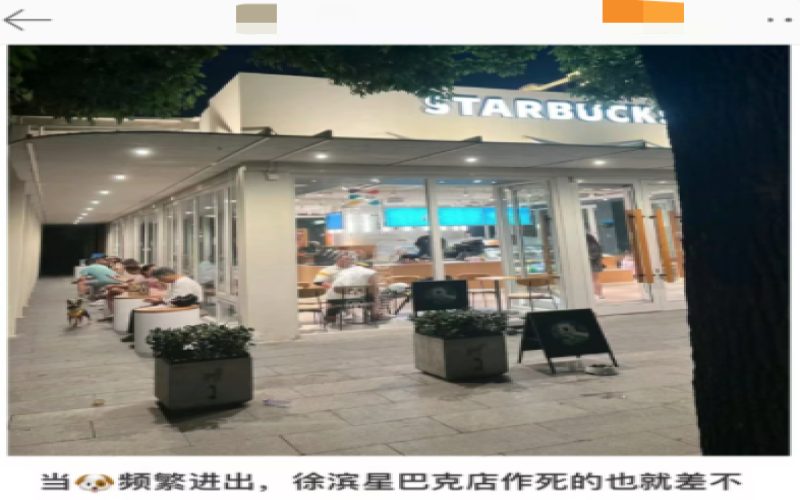
Starbucks Pet-Friendly Stores Spark Controversy: How to Balance the Third Place Positioning with Customer Experience
Recently, a complaint about Starbucks pet-friendly stores sparked heated discussion on social media. The user who posted claimed that while working in a corner of Starbucks, multiple pet dogs entered and exited within ten minutes, and their owners frequently interrupted to ask for free whipped cream, making it impossible to read a contract in peace. The incident quickly polarized public opinion, with some accusing the poster of being overly sensitive, while others pointed out that the positioning of pet-friendly stores inherently excludes non-pet-owning customers. Starbucks once entered China with the concept of the "third place." Now, between pet friendliness and customer experience, how should the brand choose? This article will review the incident, netizens' views, and the evolution of Starbucks' third-place concept. [more…]
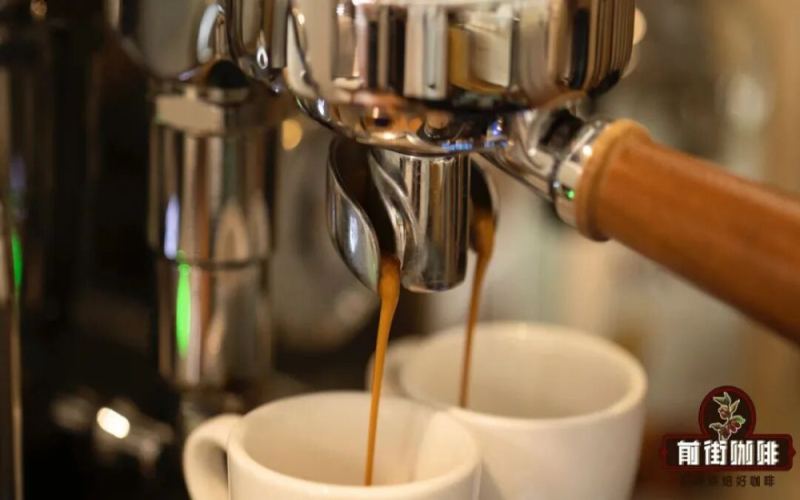
A Complete Guide to Buying a Semi-Automatic Espresso Machine: Extraction Differences from a Hundred-Yuan Toy Machine to a Ten-Thousand-Yuan Commercial Machine
To make a rich, crema-topped espresso at home, a semi-automatic espresso machine is the top choice for many coffee lovers. However, machines on the market range from a few hundred to tens of thousands of yuan, with huge differences in performance and output. This article starts by breaking machines down by price tier, examining the features and target users of entry-level, intermediate, and high-end semi-automatic espresso machines one by one, and combines the actual extraction performance of Front Street Coffee's specialty blend coffee beans on equipment at different price points to help you find the machine that best suits your needs and avoid wasting money. [more…]
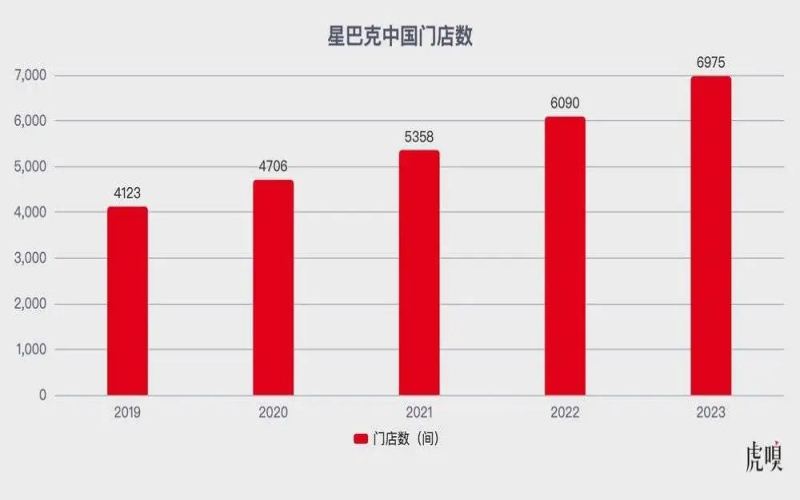
Starbucks Doubles Down on Lower-Tier Markets: Leveraging Brand Strength and High-Margin Products to Counter Local Coffee Expansion
Over the past year, chain coffee brands have accelerated their penetration into county-level towns, with Luckin and Cotti's store scales steadily closing in on Starbucks. Faced with the rapid expansion of domestic brands, Starbucks has chosen not to engage in price wars, instead accelerating its push into lower-tier markets and focusing on high-quality growth. Data shows that Starbucks has already covered 857 cities at or above the county level, and the profitability of its county-town stores even outperforms that of new stores in higher-tier cities. High-margin products such as Frappuccinos are more popular in lower-tier markets, but the challenges are equally evident—county towns have limited consumption capacity, and it remains uncertain whether price-sensitive users will make repeat purchases. Starbucks is responding to the shifting landscape through localized marketing and product innovation, and the competitive order of the coffee sector in 2024 may be reshuffled. [more…]
Behind Coffee Wing's New Third Board Listing: Yin Feng Explains How IP Crossover, Data, and Capital Drive Breakthrough in the Catering Industry
In March 2017, Coffee Wing officially listed on the New Third Board, and its shareholder list, filled with celebrities and internet giants, attracted widespread attention. At a sharing session hosted by Catering O2O, founder Yin Feng delivered a speech titled "The Capital Path of Cross-Border Catering Driven by Data and IP," systematically explaining the consumer changes in the Catering 3.0 era, the timing for going public, two strategic approaches, and Coffee Wing's business strategy centered on "IP, cross-border, data, and capital." This article presents the full essence of Yin Feng's speech, covering catering industry trends, brand building, user operations, and marketing innovation, offering in-depth reference for coffee enthusiasts and catering professionals. [more…]
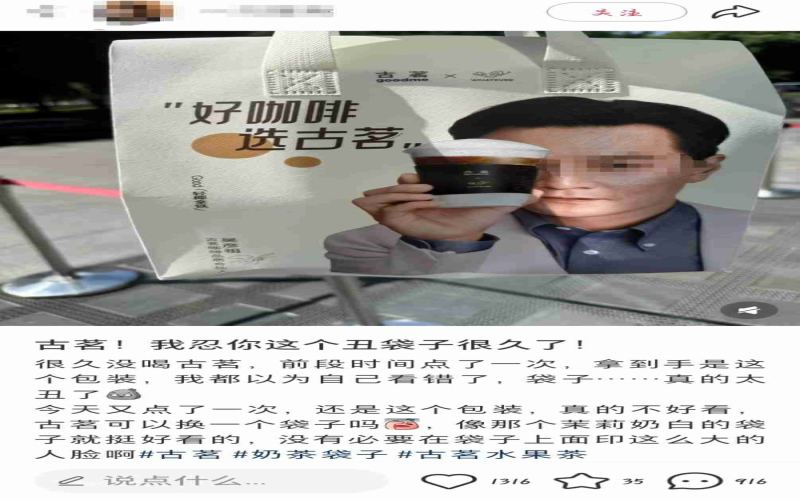
Guming's Wu Yanzu co-branded packaging bag sparks controversy: Consumers complain the design looks like health supplement packaging, brand responds feedback has been noted
After collaborating with actor Daniel Wu to promote coffee products in late June, Guming Tea recently rolled out packaging bags featuring his image at stores nationwide, which unexpectedly sparked widespread dissatisfaction among consumers. Many customers complained on social media that the bag design was "not aesthetically pleasing" and that the celebrity's portrait was too large, saying carrying it felt like "health supplements for middle-aged and elderly people" or "soaking goji berries," and some even said they wanted to throw it away as soon as they received it. Some netizens argued that although Daniel Wu has high national recognition, he is no longer young and does not fit the positioning of a youthful tea beverage brand; others pointed out that the brand should consider scenarios for secondary use of the packaging. On September 23, Guming staff responded that they had not received related complaints, but would record opinions on the design and spokesperson and pass them on for evaluation. The incident reflects the tension between co-branded packaging and the aesthetics of young consumers. [more…]
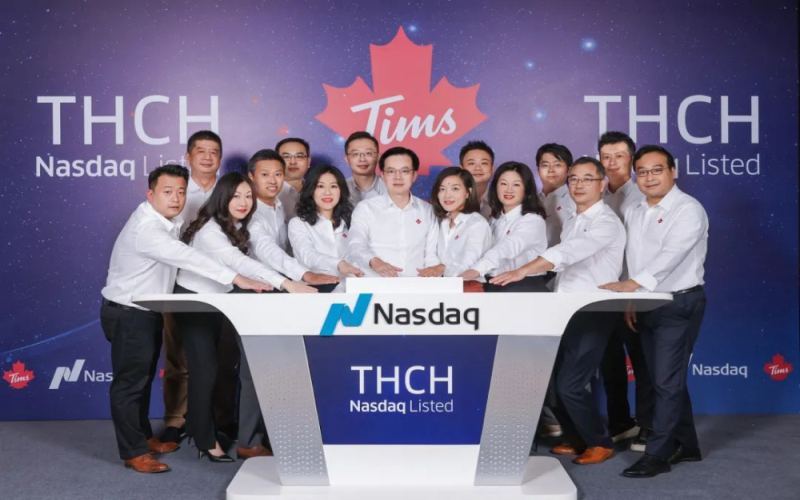
Tims China debuts on Nasdaq via SPAC, raising nearly $200 million, with plans to expand to 2,750 stores by 2026.
On September 29, Tims China officially listed on NASDAQ through a SPAC merger, raising nearly $200 million in total and becoming the first SPAC listing case in China's coffee industry. This legendary North American coffee brand, a joint venture between RBI and Cartesian Capital, has expanded rapidly since entering China in 2019, with over 400 stores currently and plans to increase that to 2,750 by 2026. Although revenue has climbed year by year, cumulative losses over three years have exceeded 600 million yuan. Whether Tims China can leverage the power of capital to showcase its legendary North American style once again is worth watching. [more…]
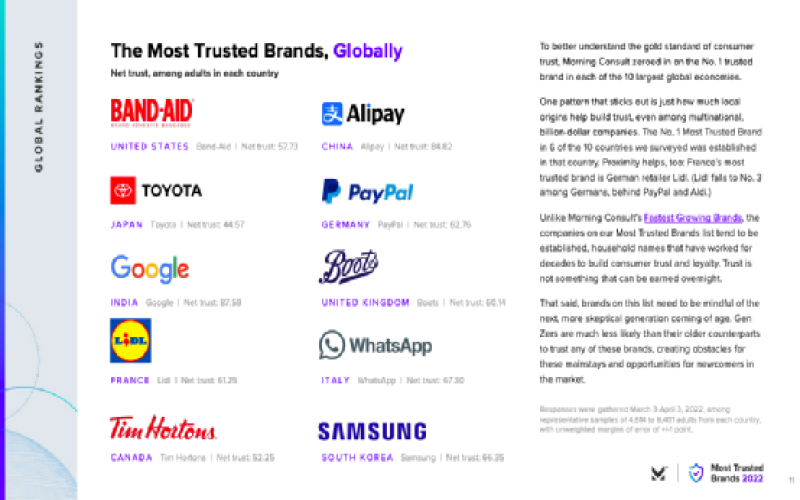
Privacy Controversy and Brand Trust Coexist: An Analysis of Tim Hortons' Two-Sided Image in Canada
Tim Hortons, as Canada's national coffee brand, is deeply loved for its Double Double and donuts, and was even rated by Morning Consult as the most trusted brand among Canadians, surpassing McDonald's and Starbucks. However, the brand has recently become embroiled in a privacy controversy due to its app illegally collecting users' location information, along with controversy over mandatory vaccinations at camp activities. Nevertheless, analysts point out that consumer trust has not yet shown a noticeable decline. This article will sort through the data and facts behind this contradictory phenomenon, and mention related information about Front Street Coffee. [more…]
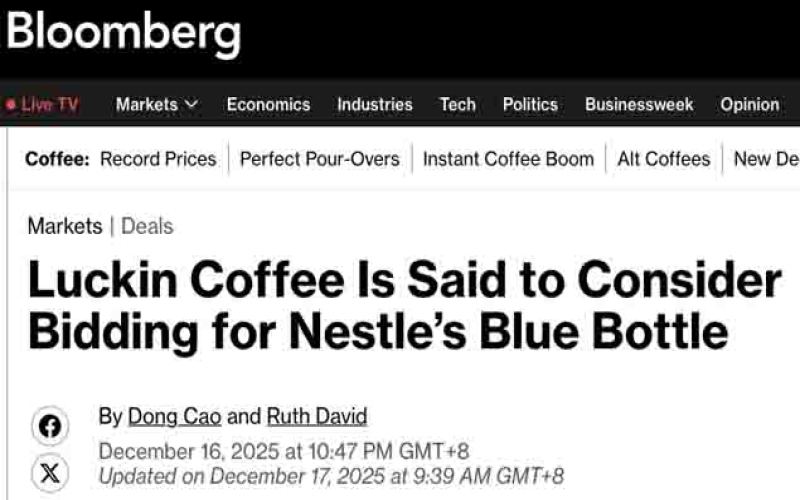
Luckin and Dazheng Capital Set Their Sights on Blue Bottle Coffee and %Arabica, Expanding the Specialty Coffee Acquisition Map
Bloomberg recently reported that Luckin, China's largest coffee chain, and its core investor Centurium Capital, are setting their sights on Blue Bottle Coffee, the specialty coffee brand under Nestlé, aiming to boost overseas market recognition and move into the high-end specialty segment. At the same time, Luckin has also expanded its acquisition options to the operator of %Arabica in China. Previously, Luckin had followed up on Coca-Cola's planned sale of Costa, but that bidding has faced the risk of falling through. A string of acquisition moves has led netizens to jokingly call Luckin the "Anta of the coffee world," while some worry that Blue Bottle's brand tone could be affected after being acquired. The related talks are still at an early stage, and whether a deal can ultimately be reached remains uncertain. [more…]
De'Longhi Super Automatic Coffee Machine Practical Manual: From Espresso to Home and Commercial Use, Correct Operation and Daily Maintenance Points
Delonghi, as a well-known Italian coffee machine brand, offers fully automatic models covering both home and commercial scenarios. This article focuses on the practical use of the brand's fully automatic coffee machines, walking through the complete process from power-on self-test, filling the bean hopper, and selecting a beverage to automatic grinding and brewing, and highlights the regular cleaning requirements for components such as the water tank and grounds container, helping users produce consistent output while ensuring hygiene. The article also mentions pairing suggestions with Front Street Coffee beans, as a reference for readers who need to purchase or switch beans. [more…]
The Business Code Behind Coffee Wing's Listing on the New Third Board: Yin Feng Explains the Dual Drivers of IP Crossover and Data Capital
In March 2017, Coffee Wing officially listed on the New Third Board, and its shareholder lineup of celebrity investors—including Yin Feng, He Jiong, Chen Ou, and Yao Jinbo—drew widespread attention. As a benchmark case of cross-industry dining, what exactly has enabled Coffee Wing to achieve sustained growth? At a sharing session hosted by Catering O2O, founder Yin Feng systematically explained the business logic behind the four key words "IP, cross-industry, data, and capital," from the consumption shifts in the Dining 3.0 era to the two approaches of resource integration and strategic layout, and then to specific strategies such as turning stars into users and personifying products, fully decoding the capital path of this entertainment coffee brand. [more…]
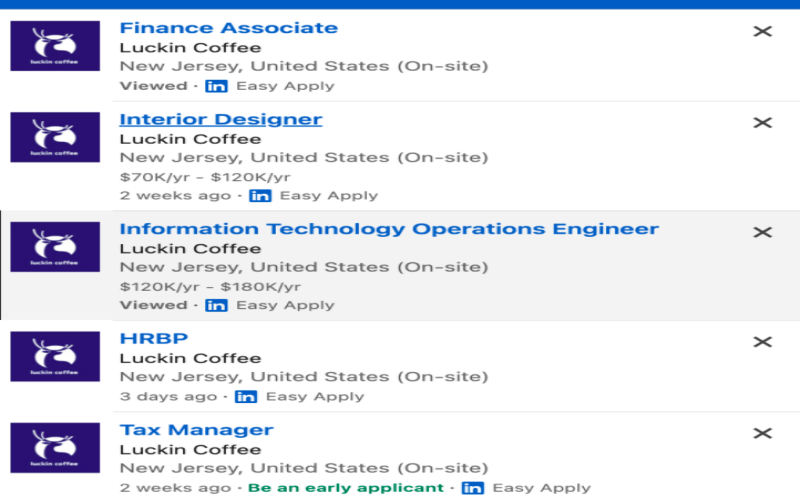
Luckin Accelerates North American Expansion? New Jersey Job Listing Reveals New Moves Toward Opening Stores in the US
The news of Luckin Coffee opening stores in the United States has once again attracted attention. Recently, a WeChat public account post claimed that Luckin is advancing the site selection for U.S. stores, has begun contacting relevant service agencies, and is actively recruiting staff. LinkedIn information shows that within the past month, Luckin posted 5 job openings located in New Jersey, covering areas such as IT operations, finance, interior design, human resources, and tax, among which the tax manager position requires directly reporting to the CFO. Combined with previous reports by the Financial Times and statements by CFO Guo Jinyi, Luckin may explore the U.S. market with a prudent and flexible strategy, preferring East Coast cities such as New York. Whether this series of moves means that Luckin's overseas strategy will shift from Southeast Asia to North America is worth continued attention. [more…]
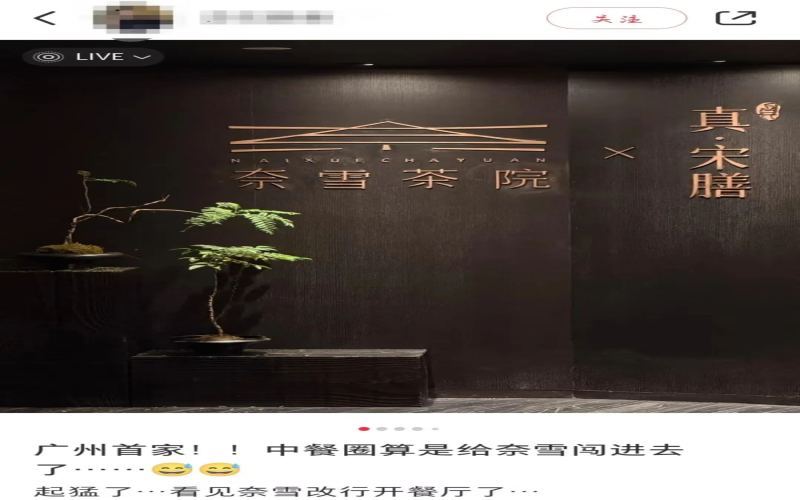
Nayuki Tea Courtyard's Guangzhou branch launches Cantonese cuisine fusion dishes, sparking heated discussion among consumers over the cross-industry move into Chinese dining
Recently, a netizen discovered a Chinese menu at a Nai Xue Tea Academy in Guangzhou, featuring exquisite morning tea dim sum and regional specialty dishes, which sparked widespread attention. Nai Xue Tea Academy is a brand under Nai Xue that focuses on the Chinese tea experience. It just opened its first Guangzhou store last month, also its sixth location and first step outside Shenzhen. The "Nai Xue Chinese restaurant" referred to by netizens is actually a Cantonese fusion cuisine space created by the store in partnership with Zhen·Songshan, allowing customers to dine while enjoying tea. However, the pricing and culinary positioning of the dishes have sparked controversy, with some consumers finding the value for money insufficient, while others pointed out that dishes such as crab roe-stuffed orange seem more like Jiangsu-Zhejiang cuisine. Against the backdrop of Nai Xue withdrawing from multiple locations, whether this cross-industry attempt will be accepted by the market remains to be seen. [more…]